Tuesday, March 15, 2011
Molly Bloom

Monday, January 31, 2011
Finally ... Ithaca

The "Ithaca" chapter contains the emotional reunion of "father" (Bloom/Odysseus) and "son" (Stephen/Telemachus), and their slaying of the suitors of Molly/Penelope. Stylistically, as a counterpoint to what has been one of the most internal and subjective novels ever written, Joyce presents us in “Ithaca” with a chapter of sheer objectivity, driving the narrative via a series of pseudoscientific questions and answers, effectively rendering this scene of great warmth and communion (Stephen & Bloom sipping cocoa, followed by Bloom crawling into bed with Molly) in terms of cold, scientific, factual information, in a skeletal style completely stripped of artifice and sentiment. Additionally, by the end of the chapter, Bloom and Stephen, two of the most developed characters in literature, have ceased to be particular, and have become, quite literally, universal (that is, two among the innumerable celestial bodies). However, despite the almost dehumanizing style of the chapter, what radiates throughout, miraculously, is the utter humanity of the characters. I personally find this chapter to be among the funniest and most emotionally wrenching of a funny, emotionally wrenching novel.
After Stephen departs, presumably to begin his artistic journey as creator/artist, Bloom joins Molly in bed, quite conscious of the clear evidence that she has committed adultery. However, unlike the heroism of Odysseus/Ulysses, who proceeds to slaughter the many suitors of his faithful wife Penelope, Bloom triumphs heroically by slaying jealousy itself; that is, he reacts with acceptance and generosity, largely by placing himself and his situation in a much greater universal/cosmic perspective. Recall Bloom's words to the Citizen: "Force, hatred, history, all that. That's not life for men and women, insult and hatred. And everybody knows that it's the very opposite of that that is really life .... Love" (333). In the wake of WWI, this becomes Joyce's model for the 20th Century Hero.
The Cabman's Shelter

After the chaotic dissonance of the climactic "Circe" chapter, Joyce begins the third section of the book ("The Homecoming") with "Eumaeus." As if to call attention to exhaustion on the part of the two main characters (and, perhaps, on the part of the reader by this point!), Joyce writes the chapter in a boring, tired, cliche-ridden style. Eumeaus was Odysseus's faithful swineherd friend, the first person approached by Odysseus (in disguise) upon his long-awaited homecoming to Ithaca. The chapter is full of red herrings and frustrated identifications. Here we meet a seafaring wanderer (Murphy) whose tales of adventure seem to make him a Ulyssean character … but this proves to be a falsehood, as Bloom, despite his obvious external differences, is actually more akin to Ulysses in his moderation and intelligence. The long-awaited meeting between Bloom and Stephen proves somewhat anticlimactic, taking place amid a series of deceptions, falsehoods, and miscommunications. Despite our expectations, Joyce here frustrates the reader, refusing to give us an overly dramatic or emotional scene. Finally, the chapter calls into question Truth and Fiction – Bloom reads a “factual” newspaper account of Dignam’s funeral, which, despite it pretenses to accuracy, does not come close to portraying exactly what occurred. (Paradoxically, Joyce’s novel Ulysses, like other great works of fiction, comes closer to portraying Truth than do most works/forms that claim to do so.)
Sunday, January 30, 2011
The Magic of Circe

In The Odyssey, Circe transforms Odysseus's men into swine; possessing a magic plant (moly) given to him by Hermes (Mercury), Odysseus is able to withstand Circe's magic and ultimately free his men from her spell.
Joyce’s 180-page closet drama (that is, a dramatic work meant to be read, rather than performed) embedded in his epic novel contains speaking parts for virtually every character introduced in the book, including inanimate objects such as The Fan and The Soap. Having taken realistic/naturalistic fiction as far as it can go, Joyce now experiments with symbolic/unrealistic fiction. After leaving the maternity ward, Bloom instinctively (perhaps paternally?) follows a very drunk Stephen and his cohorts to a brothel in "Nighttown," Dublin’s red-light district. Appropriately (given the transformational qualities of Circe’s magic) the drama consists of a series of phantasmagoric, even psychedelic images and hallucinations that serve to probe the psychological depths of both Bloom and Stephen, with each character confronting the main source of his neurosis: Bloom his failure as husband to Molly, Stephen his failure as son to his mother. Ultimately, the two characters experience a catharsis, purging them through the emotions of pity and terror. By end of “Circe,” Bloom has regained his manhood, asserting himself by saving Stephen from the whores, his drunken friends, two antagonistic military men, and the police. Finally, this father-son connection is solidified, as Bloom escorts Stephen back to his home at 7 Eccles Street.
Thursday, January 6, 2011
Bloody Oxen of the Bloody Sun
Arguably the most difficult section of the book, this chapter merely attempts to draw a comparison between the gestation of a fetus and the development of the English language through a narrative style of a series of pastiches reflecting the major stages of literary development. In doing so, I think Joyce is recalling Stephen's notion of Shakespeare's having "fathered" a literary race as well as the ongoing theme merging the act of biological creation with the act of artistic creation. In the Homeric episode, our hero and his men land on the island of Helios, the sun god, with Odysseus warning his men (per prophetic orders from both Circe and Tiresias) to refrain from harming Helios's sacred cattle. When inclement weather causes the men to be stranded on the island long enough to have expended their provisions, Odysseus's men go behind their captain's back and slaughter enough cattle for a six-day feast. When the weather clears up, the men depart, only to be subsequently struck down by Zeus's thunderbolt, leaving Odysseus the sole survivor.The chapter takes place at the maternity hospital, with Mina Purefoy in the midst of labor and Bloom meeting up with Stephen, Mulligan, and a bunch of drunken med students. Here we finally see Bloom in an overtly paternalistic role, lamenting Stephen's drunkenness and the fact that Stephen is wasting his life-bearing semen on prostitutes (or "murdered his goods with whores" (391)). This becomes the central correlation for Joyce, who sees the story of the slaughtered cattle as a "crime against fecundity" - that is, copulation (or masturbation) without any intention of actually creating life. Conversation here includes contraception, birth defects, infant mortality, and even Buck Mulligan's offer to set up a "national fertilizing farm ... [with] his dutiful yeoman services for the fecundation of any female" (402). Lynch mocks Stephen's literary ambitions: "That answer and those leaves ... will adorn you more fitly when something more, and greatly more, than a capful of light odes can call your genius father" (415). The chapter ends with the group heading out to another bar, and eventually to Dublin's red-light district; Bloom will follow, presumably to keep a watchful eye on young Stephen.
My advice on reading this chapter is as follows:
Option 1: Read it slowly carefully, with a lot of outside help to piece together stylistic and thematic elements.
Option 2: Read it rather quickly, getting the gist of the action and using any one of a number of online guides/summaries to help ground you
Option 3: Don't read it. Just get an online summary so you can move on to the next (slightly) more comprehensible chapter. I won't tell the teacher.
Thursday, November 11, 2010
Fireworks on the Beach
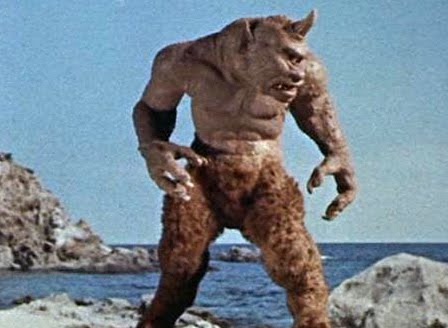
The Cyclops

Monday, September 27, 2010
The Sirens Sweetly Singing ....

I Wanna Rock!

Wednesday, August 4, 2010
Stephen, Prince of Dublin

Out to Lunch

Thursday, June 17, 2010
I ♥ the Hibernian Metropolis

Bring Out Your Dead!

Friday, June 11, 2010
Meet Leopold Bloom!

Saturday, April 17, 2010
The Tower

Well done, Gents! One meeting down, eleven to go. (A more daunting thought may be one chapter down, seventeen to go ... or 23 pages down, 760 to go.)
I thought discussion went pretty well, but I'd be interested to know what other folks thought. Too much book talk? Not enough book talk?
From what I recall, the following topics/issues were broached:
- Stephen as Telemachus, son of Odysseus
- Mulligan and Haines as two "usurpers," trying to take over Stephen's story and literary/artistic aspirations (Mulligan) and Irish culture and history (Haines)
- Stephen in mourning and guilt-ridden over his mother's death and his refusal to honor her request that he pray for her
- The old milkwoman as a symbol of Irish sterility and emptiness
- Stephen leaving the tower (without the key)
- The blasphemous, irreverent mockery of Roman Catholicism
- Ireland/Stephen as servants of two masters: English (politcal) and Italian (R.C. Church)
I don't recall us discussing the various "bowls" that fuse in the chapter: Mulligan's bowl of lather, the bowl-shaped sea, and the bowl into which Stephen's mother vomited up bile as she was dying. Nor, I think, did we talk about Joyce's emerging use of stream-of-consciousness, or internal monologue; that is, despite what at times is a fairly straightforward narrative and narrative voice, at times the narrative falls into Stephen's own internal voice/language/consciousness. This will continue during the next chapter, and by the third chapter we'll be exclusively in Stephen's head. Finally, while the novel reenacts/revitalizes The Odyssey, it also touches on Hamlet throughout - witness the melancholy, intellectual Stephen, dressed in black and in mourning for a recently deceased parent (just as Hamlet is at the beginning of the play).
If anyone has any further issues/thoughts/questions, by all means, open up discussion on Chapter One below ...
Friday, April 16, 2010
St. Stephen Picks His Nose ...

Episode 2 is referred to as "Nestor," named for the wise old sage and friend of Odysseus whom Telemachus consults. This will be used for primarily ironic effect by Joyce's having the Nestor figure here be the small-minded, cynical Mr. Deasy, headmaster of the school at which Stephen teaches. (I neglected to mention that Episode 1 takes place at 8 a.m.; this episode takes place at 10). Episode 3 (now 11 a.m.) is "Proteus," in reference to a shape-shifting sea god of that name. Stephen takes a walk on Sandymount Strand, a beach just outside Dublin proper, and waxes philosophical on a number of topics, including sensory experience, consciousness, death, the body/soul dichotomy, and plenty of other things I'm sure I'm forgetting. By this chapter we are entirely in Stephen's head, with no semblance of an outside/objective narrative to ground us. This makes these 15 pages downright excrutiating to read. If you gmake it to the end of the chapter, I'd say you've already gotten further than most people who try to read Ulysses.
Practical information: Next meeting will be Thursday, May 17 at McLadden's on Lasalle Road in West Hartford. Let's say 7:00, unless people think there needs to be a time adjustment. Happy reading!
Tuesday, March 23, 2010
Welcome!

Welcome to the official blog of the Ulysses Men's Book Club. I thought I'd lay out some ideas and offer some suggestions and see what people think.
1. Meetings: As I said in the evite, I hope to meet every month at an Irish bar to discuss the book. I'd propose the 3rd Thursday of each month, unless that proves to be a conflict for anyone.
2. Schedule: This is a long and difficult book. My proposal is to aim for our last meeting to be held on or around St. Patrick's Day 2011. The book consists of 18 "chapters," about 800 pages. Figure on an average of 60-70 pages per month. I'll have a reading schedule worked out for the first meeting. Obviously, I'd like to talk some Joyce at the meetings, but I'm fine with discussions eventually getting to the great issues of our day as well: Sox vs. Yanks, Dems vs. Reps, WH vs. Avon, Guinness vs. Murphy's, etc.
3. Difficulty: As you probably know, this is a notoriously difficult book. For my money, it's also the most rewarding book I've ever read. My advice: Don't get bogged down, keep on plowing through, and don't be shy about getting "help." (See my next post.)
4. Homework: If possible, try to read the first chapter of Ulysses for the first meeting, Thursday 4/15 at the Half Door at 7:00. If you don't get to it, don't sweat it. I'd be happy to provide some background info re: Joyce, his first novel (A Portrait of the Artist as a Young Man), and the organization of the novel.
"You should approach Joyce's Ulysses as the illiterate Baptist preacher approaches the Old Testament: with faith."
-- William Faulkner
Monday, March 22, 2010
Keeping Professors Busy